
Sculptures in the Sky: A Story of Historic Preservation
Why We're Rebuilding the Manor House Chimneys
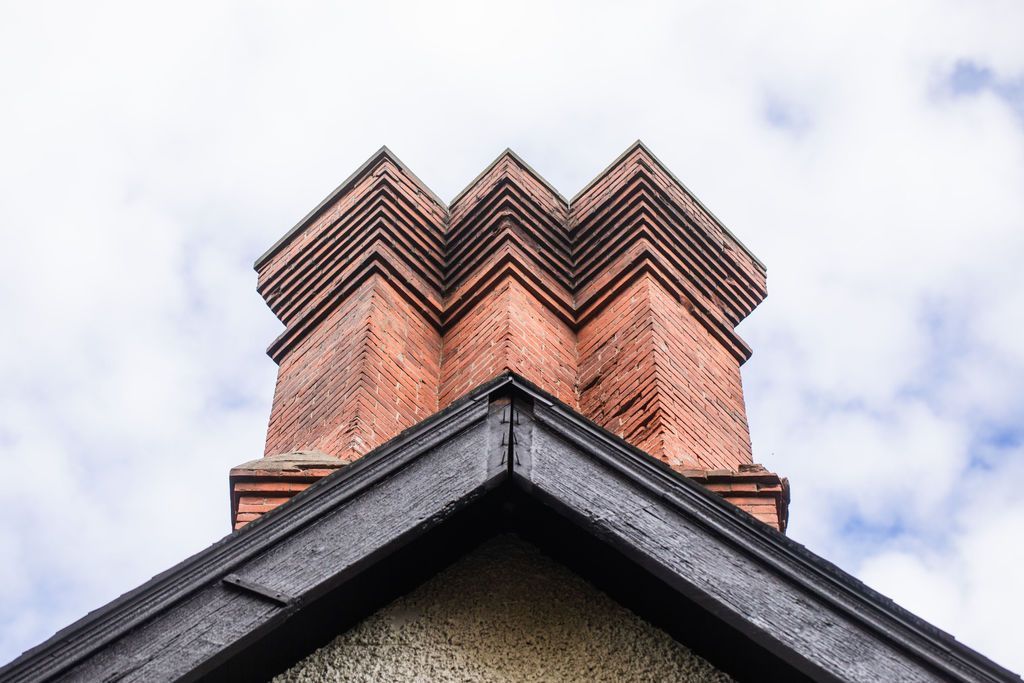
A season of sculptures and scaffolding
The Alders is quiet once again. The last guests of the season have gone, the gardens are ready for their winter slumber, and the Manor House Inn is closed to the public until April. In March, we'll open our doors again for private retreats.
Of course, quiet doesn't mean still. This winter, our chimneys are coming down, piece by piece, so we can rebuild them to stand for another hundred years.
We first noticed something was wrong on the original south-facing sleeping porch, where small bits of mortar had begun to fall from above. This porch was built to catch the sun by day and the mountain air by night, for the families who came to Norfolk, once known as the Switzerland of Connecticut, to breathe, rest, and recover. We wrapped the chimneys to ensure guest safety and took a closer look. More than a century of New England winters had left the bricks misaligned, the mortar eroding, and the crowns far from regal.
Architectural sculptures
When people first enter the gates of the Alders estate, they're often compelled to look up. Our chimneys are some of the most striking features of this historic house, reflecting an era marked by artistic excellence and understated elegance. They were never meant to be purely functional, but are sculptural, shaped by hand in 1898 by craftsmen who understood that a home could be a work of art from stone to sky.
We reflect on those makers often. They could never have anticipated how the future would unfold, who might admire their handiwork or gather around these fireplaces, or how special this corner of Norfolk would remain to visitors for generations. They built this house with the heart of artisans and a commitment to beauty that transcends time, and in return, asks something of us.
These chimneys still do the work they were built for. We are one of the last country inns in Connecticut with wood-burning fires. Although propane conversion would reduce the maintenance burden, it is hard to imagine anything other than a roaring fire in the oversized hearth. On cooler mornings, the scent of fresh-brewed coffee blends with the faint smokiness of the wood, while light through the stained glass colors the room amber, and piano music drifts in the background. We are often told it feels enchanted.
Rebuilding these storybook chimneys faithfully is slow, skilled, and expensive work. It would be far easier and more affordable to replace them with something simpler and utilitarian. We have chosen not to do that.
Why a small business chooses preservation
When we bought the Alders Estate, we knew we were being called to steward a small piece of Connecticut's storied history. This house was built long before we were born and, if we steward it well, it will stand long after we're gone as a treasure in the town and a tribute to our state's past.
Every decision since has carried that weight and that privilege.
Historic preservation is often the work of large institutions, foundations, government programs, and grants. Those matter enormously. But much of what sustains a New England town rests with ordinary owners: the families, innkeepers, and shopkeepers who decide, again and again, to repair rather than replace, with their own investment of time, talent, and intention.
For a small business, those choices are never incidental, and are rarely efficient. They take patience, perseverance, and enough passion to justify the price. We make them because the alternative is a landscape slowly emptied of its character, one practical renovation at a time. Once a building like this loses what makes it singular, it does not come back. In fact, the Alders is the last Gilded Age mansion still standing in the village. The rest have burned down or been razed.
Holding the past and imagining what's possible
Our commitment to preservation is a tribute to the past, but not a longing for a time that can never return. Norfolk has always been shaped by people who arrived from somewhere else with new energy and ideas. The summer families of the Gilded Age came from New York and Boston, built the estates we now cherish, and founded the organizations and institutions that remain Norfolk's cultural heartbeat.
Today, a new generation of newcomers is arriving, investing in architectural treasures throughout the village and breathing new life into them, with history and craftsmanship honored alongside industry and innovation. We count ourselves among them.
Love for a place can quietly turn into a wish to keep it as we remember it. But places, like people, either grow or fade. We don't want Manor House to be trapped in time and inaccessible to the public, admired from a distance and closed to those who weren't here before. We want to share it as a living legacy that connects the past to the future and welcomes friends and strangers alike. A space for like-minded people to gather around shared tables, thoughtful conversations, meaningful relationships, and beautiful ideas that elevate the human spirit.
Preservation and progress are necessary partners. Those of us called to steward these places carry a responsibility to future generations to build something that will stand the test of time and be worth inheriting as the village evolves. We can't do it alone. Keeping Connecticut's legacy alive asks communities to welcome the entrepreneurs and investors willing to care for its historic homes, inns, and villages, and to help write their next chapter.
The chimneys have become a quiet teacher for us. Their makers laid every brick for a future they would never see. Now it's our turn. We follow their design, brick by brick, with the knowledge and skill of our own generation. What they began, we continue. And someday, someone we'll never meet will continue it after us.
Until spring
If you drive past this winter, you'll see scaffolding where the chimneys usually stand. We hope you'll see it the way we do, as an act of care for the house, for Norfolk, and for whoever comes after us.
We'll share the progress here in the journal through the winter.
In March, we welcome our first retreat groups of the season, and in April we open our doors to everyone again.
We filmed the chimneys before the work began.
Till spring...